After the Supreme Court Ruling, What Is Next for Trump’s Tariffs?
CFR President Michael Froman analyzes the aftermath of a Supreme Court decision that struck down tariffs imposed under the International Emergency Economic Powers Act (IEEPA).
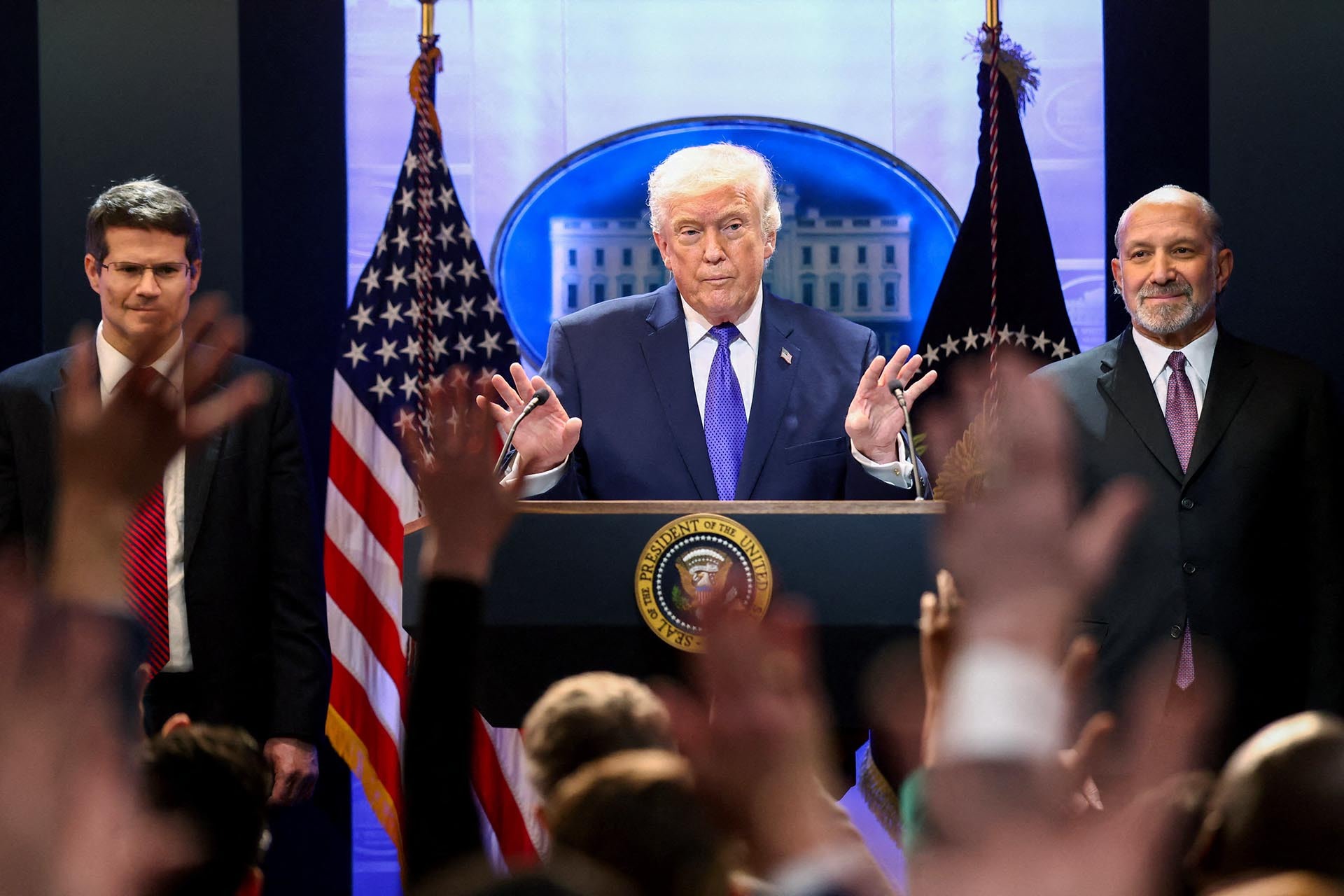

The Supreme Court has issued its long-awaited decision and declared that President Donald Trump did not have the power to issue tariffs by way of the International Emergency Economic Powers Act (IEEPA).
The 6-3 decision was based on an analysis that taxation is clearly the authority of the Congress, that IEEPA doesn’t mention the word “tariffs,” and that no previous president has used IEEPA to impose tariffs.
IEEPA is only one of several statutes under which the president has imposed tariffs. Going forward, the administration has a number of other authorities it can use to try to replace the IEEPA tariffs, but they are more constrained. They either require greater process, such as investigations, or they are time limited. For example, under Section 122, a president can impose up to 15 percent tariffs for 150 days by citing a balance of payments crisis and using that time to launch and complete processes under other authorities, such as Sections 201, 232, 301, or 338. (My colleague Inu Manak, senior fellow for international trade, has just published an analysis for CFR.org which outlines in more detail these authorities and how Trump could use them.) At a press conference on Friday, Trump announced the imposition of a 10 percent tariff under Section 122, later increasing the rate to 15 percent.
But since the 15 percent tariff to be implemented under Section 122 can be imposed for just five months, the administration will soon face a decision whether to impose new tariffs under the other authorities just before the midterm elections. We know from a study that CFR commissioned with Morning Consult that a majority of the American public believes that tariffs are contributing to higher prices and that there should be guardrails around the president’s ability to impose them. Indeed, the timing of the decision in an election year could make this a politically fraught issue.
So, what happens now?
First, to implement the decision of the Supreme Court, the administration would be expected to issue instructions to Customs and Border Protection (CBP) to stop collecting the tariffs imposed under IEEPA. It would still collect tariffs issued under Section 232 (on national security grounds) and Section 301 (on grounds that countries discriminate against U.S. products), plus the new 15 percent tariff under Section 122.
Second, there is uncertainty about what needs to happen for the importers to get refunds for the IEEPA tariffs they have paid over the last several months, but it is clear that refunds are owed based on prior case law. For some importers, this will require them to file petitions or go to court.
Third, the Trump administration is likely to launch or conclude investigations under other authorities and try to replicate IEEPA tariffs before the 15 percent tariff under Section 122 expires in five months.
Fourth, while other countries are probably celebrating the decision, they may be reluctant to explicitly seek to abrogate or renegotiate agreements which could attract the ire of Trump. Some countries might see a reduction in the tariffs they agreed to pay, even with the imposition of the 15 percent Section 122 tariffs, at least in the short run. In the end, however, between the Section 122 tariff, plus any subsequent tariffs imposed under Sections 232 and 301, most could end up being pretty close to where they are now.
In addition to countries, some companies have made agreements with the Trump administration in response to the threat of IEEPA tariffs. For example, much of the pharmaceutical industry agreed to invest hundreds of billions of dollars in the United States, including changing their business model and moving production to the United States. While they might revisit their plans, given the uncertainty about where the tariffs will ultimately land, including under a Section 232 investigation of pharmaceutical imports, they may well continue with their plans they have laid out.
Fifth, there is the issue of revenue. Tariffs under IEEPA have brought in more than $175 billion. Legally, that should be refunded, but going forward, the combination of the 15 percent tariff under Section 122 and whatever additional tariffs might be imposed as the Section 232 and 301 processes conclude could well substitute for that.
Finally, perhaps the most consequential impact of the Supreme Court’s decision is that it should curtail the threat or use of tariffs as the president’s preferred form of leverage or punishment outside the trade domain—from the threatened tariffs against European countries over their defense of Greenland or against Canada for agreeing to allow the import of electric vehicles from China, to the imposition of tariffs on Brazil for its treatment of former President Jair Bolsonaro. Trump will need to find another way to express his pique toward other countries.
On balance this is a landmark decision by the Supreme Court, a setback for the Trump administration, and a reminder that checks and balances still operate, but in the long run, we are still likely to be living in a global economy defined by higher tariffs than existed prior to the Trump administration. As the French say, plus ça change…
Let me know what you think about the administration’s tariff regime and what this column should cover next by replying to [email protected].